
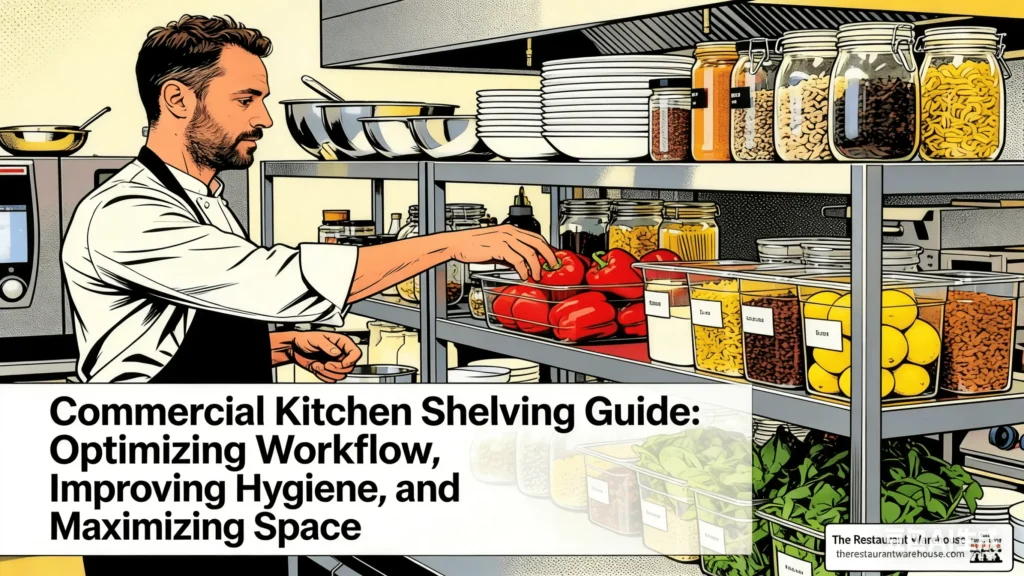
In a commercial kitchen, shelving is far more than a place to store supplies. A well-designed storage system directly affects workflow efficiency, food safety, staff productivity, and overall operational consistency.
Many kitchen performance issues are not caused by a lack of equipment or labor, but by poorly planned storage. Disorganized shelving increases search time, raises contamination risks, and slows service during peak hours. A professional shelving system forms the foundation of an efficient and hygienic commercial kitchen.
1. What to Evaluate Before Purchasing Kitchen Shelving
Before selecting shelving for a commercial kitchen, proper upfront evaluation can prevent costly adjustments and inefficient layouts later.
Space Utilization and Workflow Planning
Kitchen storage planning should go beyond floor space and focus on vertical utilization. Effective use of vertical space significantly increases storage capacity without expanding the kitchen footprint.
Shelving placement must also respect primary traffic paths. Storage units should never obstruct movement between prep areas, cooking stations, or cleaning zones, as this can slow operations and increase safety risks.
Functional Zoning
Different kitchen zones have different storage requirements. Zoning shelving according to workflow reduces unnecessary movement and improves efficiency.
Prep areas should prioritize accessibility for frequently used ingredients and tools. Cooking zones often require heat-resistant and durable materials, while dishwashing and cold storage zones demand moisture resistance and easy-to-clean surfaces. Proper zoning is a fundamental principle of professional kitchen design.
2. Material Selection: Choosing Durable and Compliant Options
Material choice has a direct impact on durability, cleaning efficiency, and food safety compliance.
Stainless Steel
Stainless steel is widely regarded as the industry standard for commercial kitchens. It offers excellent corrosion resistance, heat tolerance, and a smooth, non-porous surface that is easy to sanitize and compliant with strict food safety standards.
It is particularly suitable for food preparation areas, cooking zones, and any environment with high hygiene requirements.
Aluminum
Aluminum shelving is lightweight and corrosion-resistant, though generally less rigid than stainless steel. It is commonly used in walk-in coolers or general storage areas where weight reduction and ease of handling are priorities.
Wire Shelving (Chrome and Epoxy-Coated)
Wire shelving is widely used in commercial kitchens due to its open design. Its key advantages include airflow, visibility, and reduced dust and moisture accumulation.
Chrome-plated wire shelving is suitable for dry storage areas. In wet or humid environments such as dishwashing zones or walk-in refrigerators, epoxy-coated wire shelving is recommended to improve rust resistance and long-term durability.
Plastic and Polymer Shelving
Plastic shelving systems are completely rust-proof and lightweight, with good resistance to moisture. They are often used under sinks, in cold storage, or in salt-rich environments. However, their load capacity and long-term durability are typically lower than metal alternatives.
3. Shelving Types: How Structure Determines Function
Different shelving structures serve different operational needs.
Freestanding Shelving Units
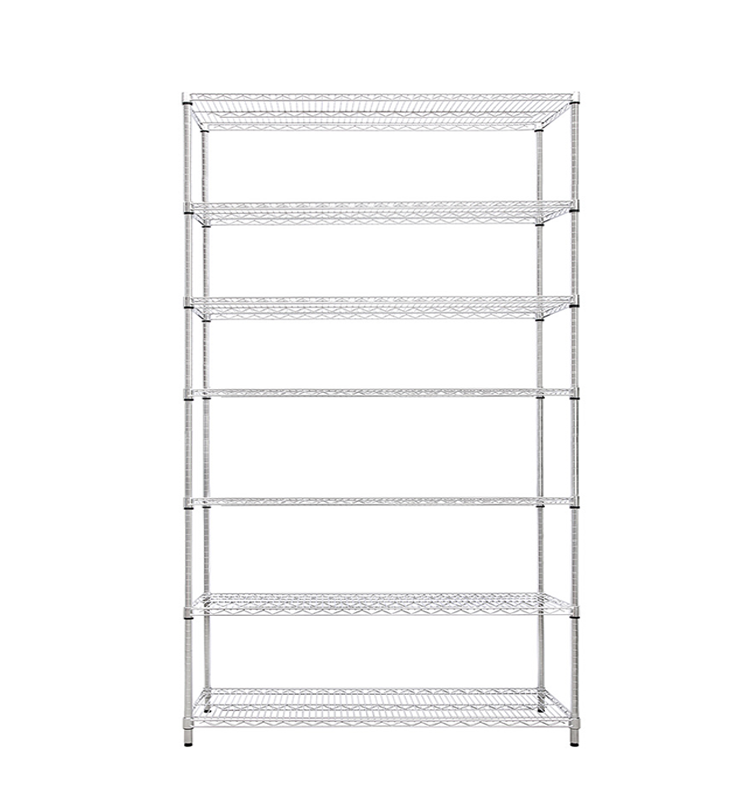
Freestanding shelving is the most common solution in commercial kitchens. These units offer strong load capacity, flexible placement, and do not require wall installation. They are ideal for bulk ingredients, dry goods, and heavy supplies, making them the backbone of most storage systems.
Wall-Mounted Shelves
Wall-mounted shelving frees up valuable floor space and keeps frequently used items within easy reach. These shelves are commonly installed above worktables to store spices, utensils, and small equipment.
Proper wall strength and correct installation height are essential to ensure safety and long-term stability.
Mobile Shelving
Mobile shelving units are equipped with casters, allowing staff to move supplies easily between workstations. They also simplify floor cleaning and are well suited to kitchens that require frequent layout adjustments.
Specialized Shelving Solutions
Cantilever shelving is useful for long or oversized items, while in-cabinet components such as pull-out drawers and rotating shelves help improve accessibility in deep cabinets and reduce retrieval time.
4. Key Buying Considerations
Several factors should be carefully evaluated before finalizing a shelving decision.
NSF certification is essential for commercial kitchens, as it ensures compliance with food safety regulations. Load capacity must match the weight of stored items to prevent long-term structural stress. Adjustable shelving allows the system to adapt to future menu or inventory changes. Ventilation is especially important in cold storage and high-humidity areas, where proper airflow helps maintain food safety.
5. Management and Maintenance: Maximizing Shelving Value
Even the best shelving system requires proper management to deliver long-term benefits.
From an inventory perspective, open wire shelving supports FIFO (First In, First Out) practices by improving visibility and access. Assigning fixed locations for frequently used items reduces search time and improves workflow consistency.
Regular maintenance is equally important. Periodic inspections should focus on fasteners, joints, and load distribution. Cleaning methods should be adapted to material type. Stainless steel surfaces should avoid harsh corrosive cleaners, wire shelving should be checked for coating damage, and wooden components, if used, require moisture protection.
Conclusion
Choosing the right kitchen shelving system is a direct investment in operational efficiency. The impact extends beyond storage capacity to service speed, staff ergonomics, food safety, and long-term operating costs.
By starting with proper space evaluation, aligning shelving with functional zones, selecting compliant materials, and maintaining the system correctly, commercial kitchens can build an organized and reliable storage foundation that supports consistent performance and growth.