

When businesses plan a storage system for warehouses, retail stockrooms, or commercial kitchens, one question comes up frequently:
Should you choose chrome wire shelving or stainless steel shelving?
At first glance, the two types of shelving look very similar. Both use metal wire shelves and modular designs, and both are widely used in commercial storage systems.
However, the materials behave very differently depending on the environment. Choosing the wrong type can lead to rust, higher maintenance costs, or shorter product lifespan.
The key difference usually comes down to where the shelving will be used.
What Is Chrome Wire Shelving?
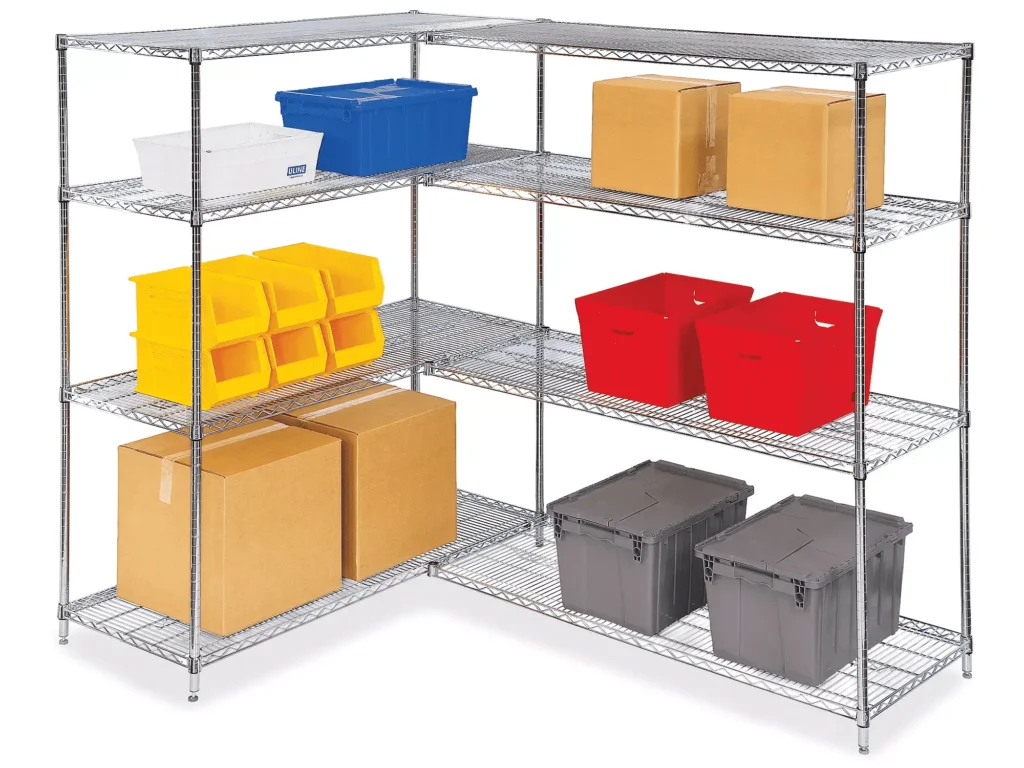
Chrome wire shelving is made from steel that is coated with a chrome plating finish. The chrome layer gives the shelves a smooth, shiny surface and basic protection against corrosion.
Because it is affordable and durable enough for most dry environments, chrome shelving is widely used in:
warehouses
retail stockrooms
offices
e-commerce fulfillment centers
One advantage of wire shelving in general is air circulation. The open wire design allows air to flow through the shelves, which helps prevent dust buildup and improves visibility of stored items.
For many businesses, chrome shelving offers a practical balance between cost and durability.
What Is Stainless Steel Shelving?
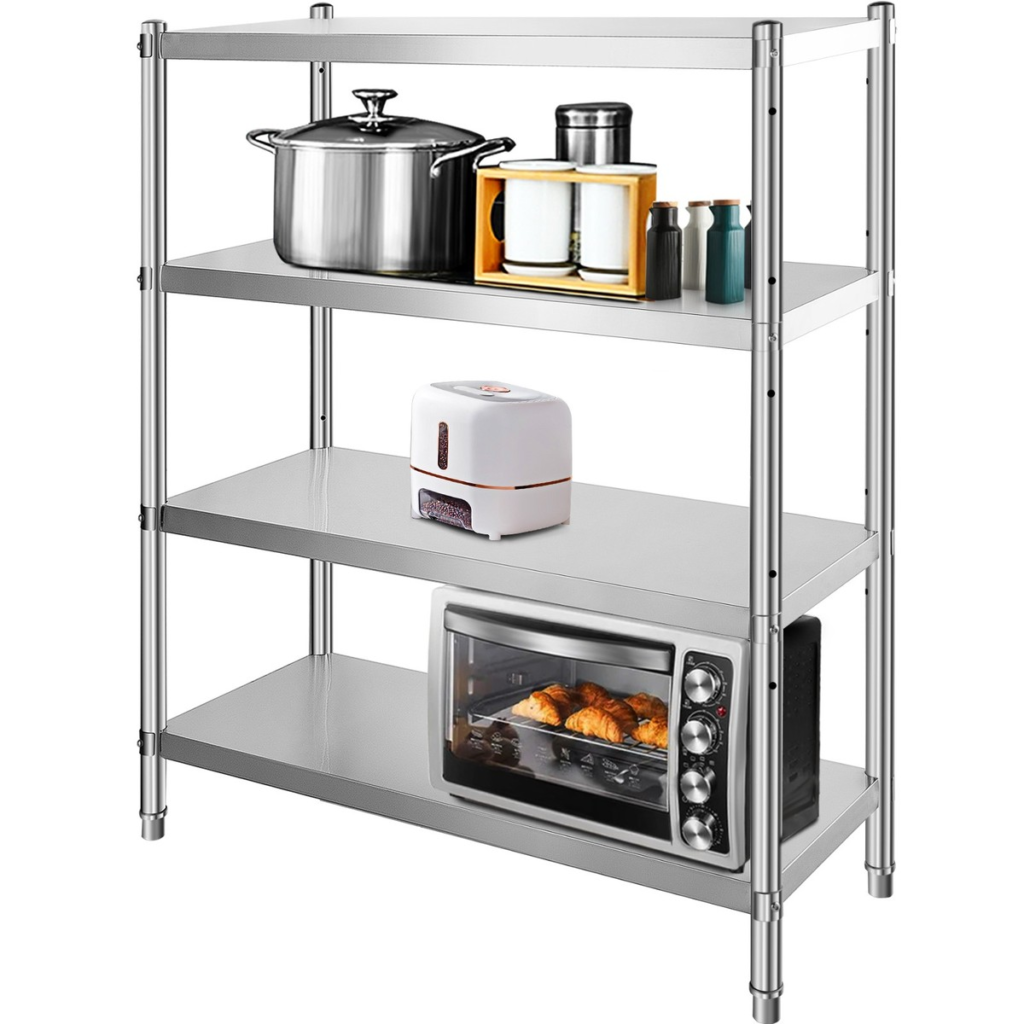
Stainless steel shelving is made from solid stainless steel, which naturally resists corrosion and rust.
Unlike chrome plating, which protects only the surface, stainless steel contains chromium within the material itself. This creates a protective layer that prevents rust even when the surface is scratched.
Because of this property, stainless steel shelving is commonly used in environments where moisture is present, such as:
commercial kitchens
food processing facilities
laboratories
cold storage rooms
These environments require shelving that can withstand water exposure and frequent cleaning.
Key Differences Between Chrome and Stainless Steel Shelving
| Feature | Chrome Wire Shelving | Stainless Steel Shelving |
|---|---|---|
| Material | Steel with chrome plating | Solid stainless steel |
| Corrosion resistance | Moderate | Very high |
| Cost | Lower | Higher |
| Maintenance | Moderate | Low |
| Best environment | Dry storage areas | Wet or humid environments |
In simple terms, chrome shelving is usually chosen for general storage, while stainless steel shelving is used in hygienic or moisture-heavy environments.
When Chrome Shelving Is the Better Choice
Chrome wire shelving is a good option when the storage environment is dry and well ventilated.
It is commonly used in:
warehouse storage
retail backrooms
office storage areas
distribution centers
For these environments, chrome shelving provides a reliable storage system at a lower cost.
When Stainless Steel Shelving Is Worth the Investment
Stainless steel shelving becomes the better choice when the storage environment involves moisture or strict hygiene requirements.
Typical applications include:
restaurant kitchens
food preparation areas
hospitals or laboratories
cold storage facilities
Although stainless steel shelving is more expensive, its resistance to corrosion can make it more durable in the long run.
How Businesses Usually Decide
In practice, many businesses choose shelving based on environment rather than appearance.
If the shelving will be used in a dry warehouse or retail environment, chrome wire shelving is usually the most cost-effective solution.
If the shelving will be exposed to water, humidity, or frequent cleaning, stainless steel shelving is typically the safer long-term choice.
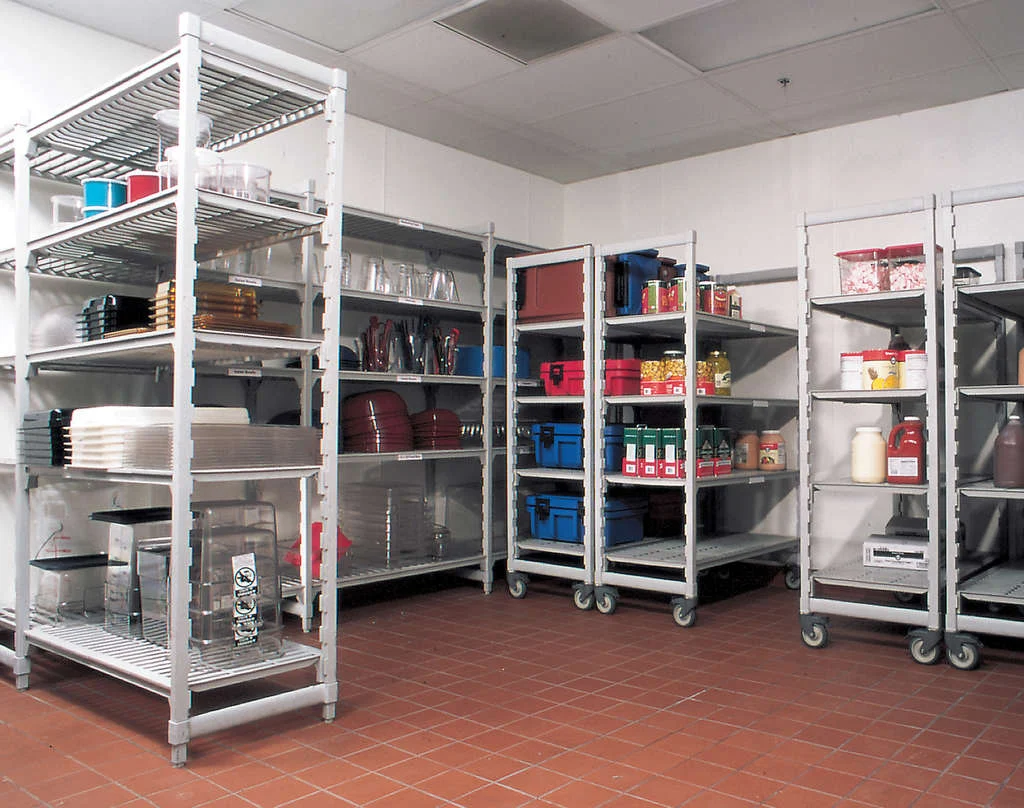
Some facilities even use both types. For example, a restaurant may use stainless steel shelving in the kitchen while using chrome shelving in dry storage areas.
Final Thoughts
Chrome wire shelving and stainless steel shelving both provide flexible and durable storage solutions. The best option depends largely on the environment where the shelving will be used.
Chrome shelving is a practical and economical choice for dry storage areas, while stainless steel shelving offers superior corrosion resistance for demanding environments.
Understanding these differences helps businesses choose the right shelving system and avoid unnecessary replacement or maintenance costs.
Does chrome wire shelving rust?
Chrome wire shelving has a protective chrome plating that helps resist rust in normal conditions. However, if the chrome coating is scratched or the shelving is used in a humid environment, the exposed steel underneath may eventually rust.
For dry storage areas such as warehouses, offices, or retail stockrooms, chrome shelving usually performs well.
Is stainless steel shelving better than chrome shelving?
Not always. Stainless steel shelving is better for wet or high-humidity environments, such as commercial kitchens or cold storage rooms.
However, for dry warehouse storage or retail backrooms, chrome wire shelving is often the more cost-effective option while still providing good durability.
Can chrome wire shelving be used in cold storage?
Chrome shelving is generally not recommended for cold storage or very humid environments. Condensation and moisture can damage the chrome coating over time and lead to rust.
In cold rooms or food processing areas, stainless steel shelving is usually the better choice.
Which shelving lasts longer?
In dry environments, chrome wire shelving can last many years with proper use.
However, in humid or wet environments, stainless steel shelving typically lasts longer because the material itself is resistant to corrosion.
Why do restaurants often use stainless steel shelving?
Restaurants and food preparation areas require shelving that can withstand frequent cleaning, water exposure, and strict hygiene standards.
Stainless steel shelving is easier to clean and more resistant to corrosion, which is why it is commonly used in commercial kitchens and food storage areas.
