

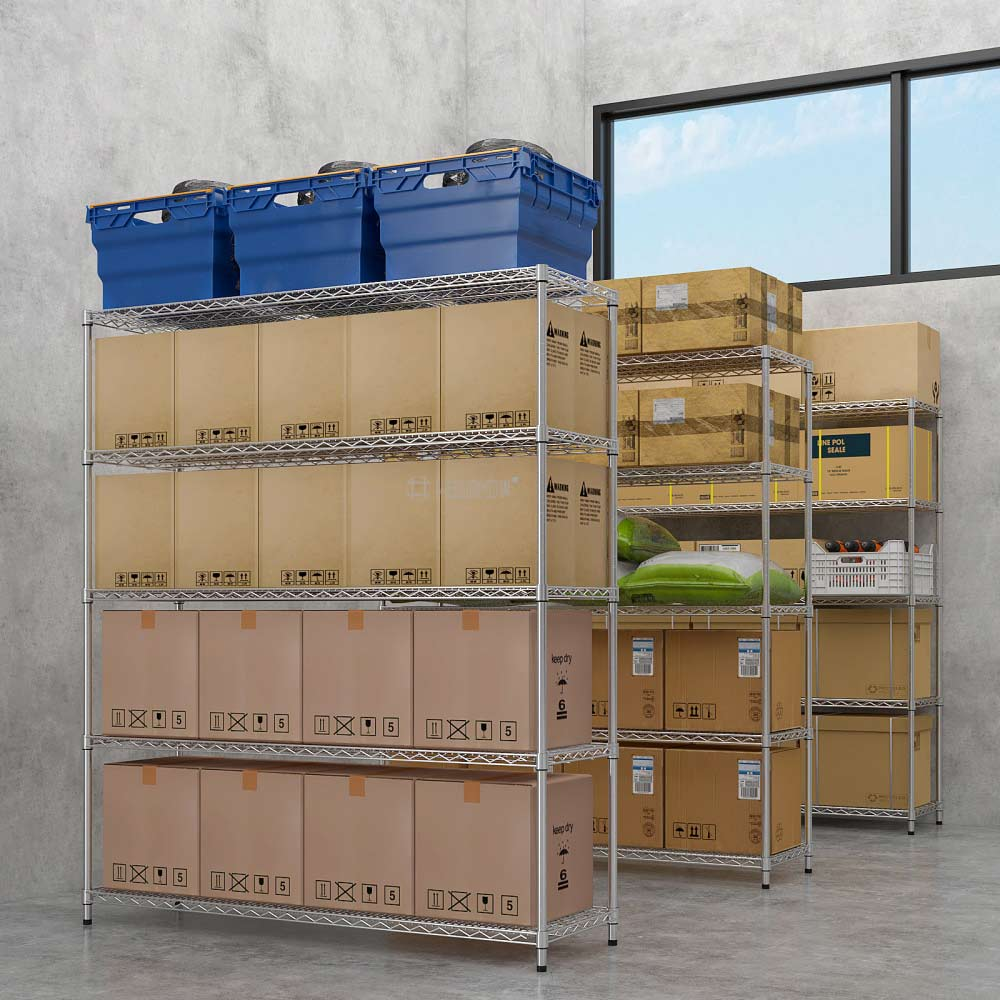
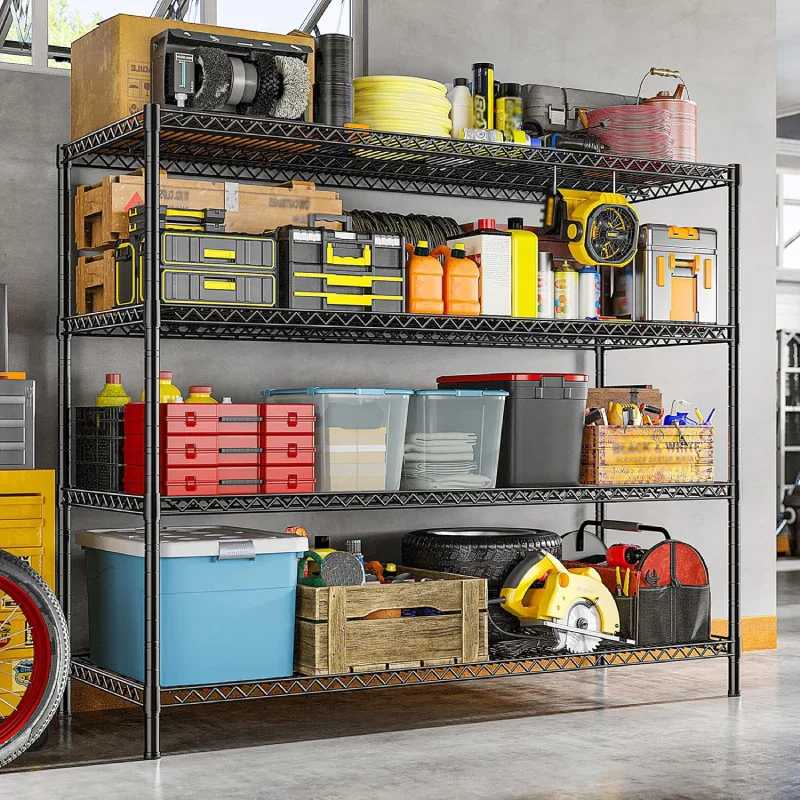
Commercial wire shelving is widely used in warehouses, retail stockrooms, restaurants, and fulfillment centers. It’s popular because it is durable, modular, and relatively easy to install.
However, many businesses choose shelving based only on price. After installation, they realize the shelves are not deep enough, the load capacity is insufficient, or the layout makes daily work inefficient.
Choosing the right shelving system requires understanding how it will actually be used in your space. Below are several key factors businesses should consider before purchasing commercial wire shelving.

Understand What You Will Store
Before choosing shelving, start by looking at the products you plan to store.
For example, an e-commerce warehouse storing cartons has very different requirements from a restaurant kitchen or retail backroom.
It helps to identify a few details first:
typical product or carton size
approximate weight of each item
how many items will be stored on each shelf
how often the items will be accessed
These factors determine the shelf depth, spacing, and load capacity you should choose.
Choose Shelving Dimensions That Fit the Space
Commercial wire shelving is commonly available in sizes such as:
| Width | Depth | Height |
|---|---|---|
| 900 mm | 350 mm | 1800 mm |
| 1200 mm | 450 mm | 2000 mm |
| 1500 mm | 600 mm | 2200 mm |
Selecting the right dimensions helps balance storage capacity and workspace efficiency.
For example, deeper shelves work well for carton storage, while shallower shelves may be more convenient in retail stockrooms where items need to be accessed quickly.

Check the Load Capacity
Even if shelving units look similar, their load capacity can vary significantly.
Typical commercial shelving capacities include:
light-duty shelving: 100–150 kg per shelf
medium-duty shelving: 200–350 kg per shelf
heavy-duty shelving: 400 kg or more per shelf
Choosing the right load capacity helps prevent long-term issues such as shelf bending or instability.
Select the Right Material and Surface Finish
Wire shelving is usually made from steel, but the surface finish determines where it should be used.
Common options include:
Chrome shelving – widely used in warehouses and retail environments.
Stainless steel shelving – ideal for kitchens or areas with high humidity.
Epoxy-coated shelving – often used in cold storage or damp environments.
Selecting the correct material can extend the lifespan of the shelving system.
Practical Tips When Buying Wire Shelving
In real warehouse setups, small details often make a big difference. These practical tips can help avoid common problems:
Measure doors and elevators first
Tall shelving units sometimes cannot pass through warehouse doors or elevators.
Choose shelves slightly deeper than your products
Leaving 50–100 mm extra space makes it easier to grab cartons.
Leave enough aisle space
For manual operations, aisles of 800–1000 mm usually allow comfortable movement.
Use different shelving for different areas
Picking zones may need shallower shelves, while bulk storage areas can use deeper units.
Conclusion
Commercial wire shelving is a simple but essential part of many business storage systems. Choosing the right size, load capacity, and material can significantly improve storage efficiency and daily workflow.
For businesses that require long-term supply or customized shelving configurations, working with an experienced wire shelving manufacturer or supplier can help ensure consistent product quality and scalable storage solutions.
