
Contents
ASRS replaces the picker’s walk with a machine’s movement: mini-load cranes, shuttle robots, carousels, and VLMs bring items to the operator or pick station. Automation delivers density, accuracy, and 24/7 operation — but the ROI only works at sufficient volume, SKU stability, and labor cost. Warehouse management systems are the software backbone that makes automation accurate, and where forklifts remain, OSHA powered industrial truck rules still govern the operation.
The Short Answer
Automated Storage and Retrieval Systems (ASRS) use machines — cranes, shuttles, carousels, or vertical lifts — to store and retrieve items instead of a person walking to the location. The core benefit is density plus speed: automated systems store higher (using the full building height), work 24/7, and cut labor and error rates dramatically — at the price of significant capital investment and software dependency. ASRS is not automatically “better”; it is a ROI decision that favors high-volume, stable-SKU, labor-constrained operations, and warehouse management systems are the software backbone that makes automation accurate. ASRS technology spans everything from small carousels to full warehouse-scale crane systems.
What ASRS Is
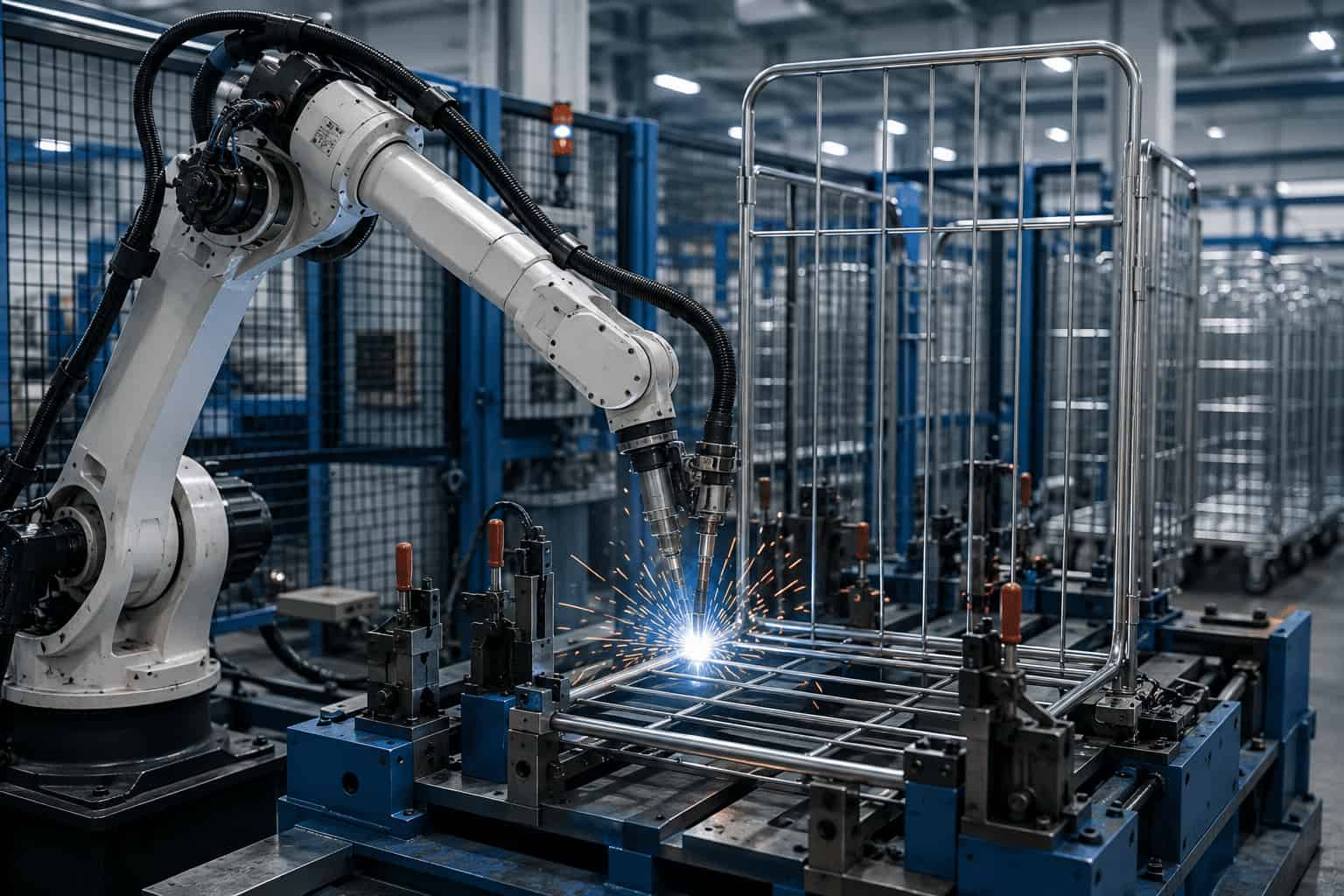
ASRS is a family of systems, not one machine. Common thread: a computer-controlled storage unit that brings items to a picking station (goods-to-person) or a crane that travels to the item (person-to-goods, automated). The main families: mini-load ASRS (crane-served tote systems), shuttle rack systems (robotic shuttles inside rack lanes), vertical carousels and vertical lift modules (VLM, goods-to-person vertical units), and horizontal carousels (rotating shelves). Each trades footprint, throughput, and cost differently — the right one depends on order profile and volume.
Mini-Load ASRS
Mini-load ASRS uses an automated crane moving along a rack aisle to store and retrieve totes or cartons from rack positions. It is the workhorse of e-commerce and distribution: high density (racks to ceiling height), high throughput (the crane does the travel), and precise inventory control through the WMS. Mini-load handles small-to-medium items in totes — ideal for picking small parts, pharmaceutical, and e-commerce. Capital cost is significant (cranes, racking, software), so mini-load pays off at high order volume where labor savings and accuracy matter most.
Shuttle Rack Systems
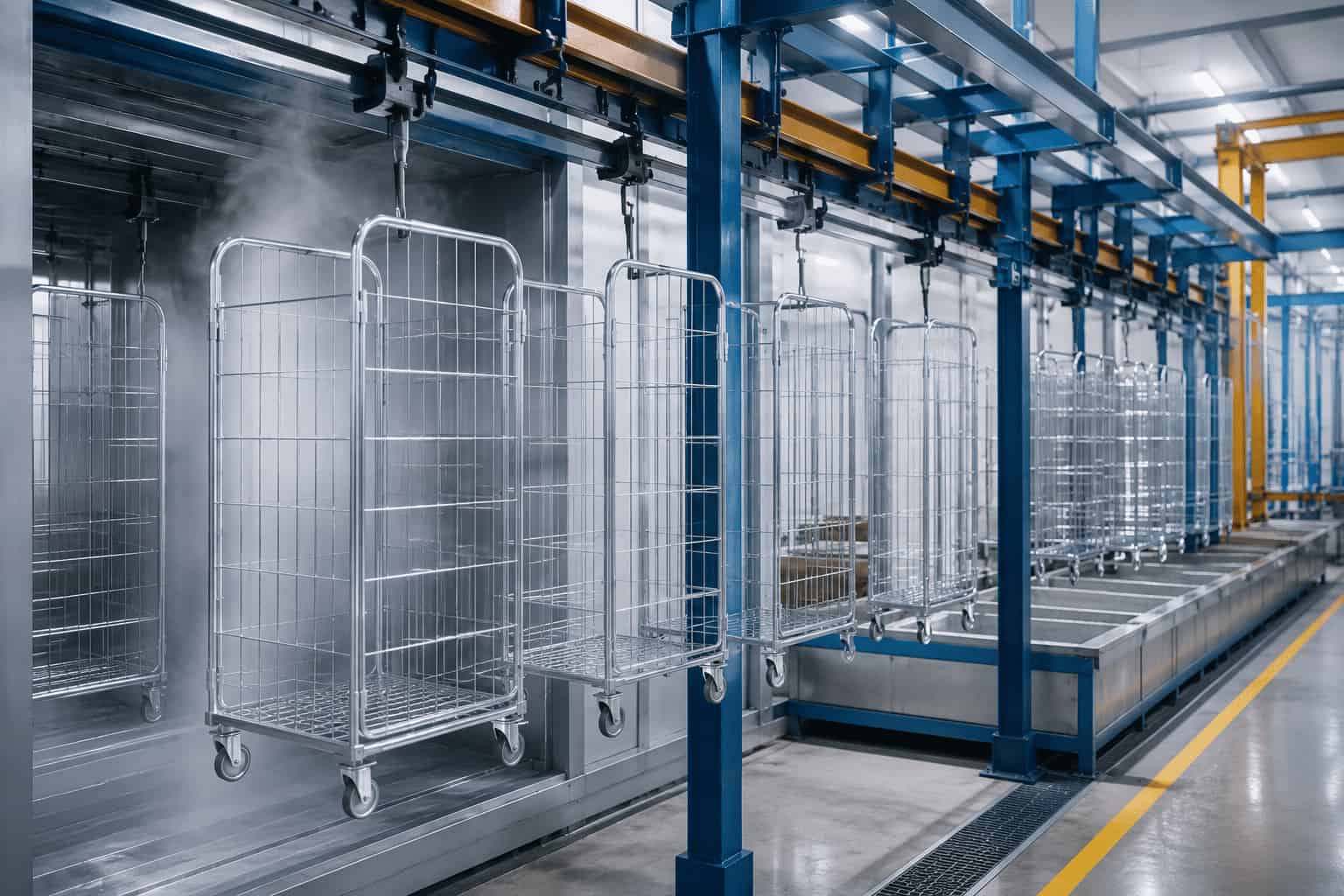
Shuttle systems place robotic shuttles inside rack lanes that carry pallets or totes to the aisle end, where a lift or fork truck takes over. Shuttles combine high-density storage (deep lanes like drive-in) with automated retrieval and FIFO/LIFO flexibility — unlike drive-in, the shuttle can access any position in the lane. Pallet shuttles suit high-volume, low-SKU bulk storage; tote shuttles serve order picking. The system can retrofit into existing rack structures in some configurations, lowering entry cost. It is a strong middle ground between manual racking and full ASRS.
Vertical Carousels & VLMs
Vertical carousels rotate shelves in a loop to bring items to the operator’s window; VLM (vertical lift module) units use a central extractor that moves shelves to the access opening — faster and more secure than carousels, ideal for small, high-value parts. Both are goods-to-person units that save floor space by using vertical height and suit small-parts storage, tool cribs, spare parts, and pharmaceutical picking. They are the most accessible ASRS entry point: a single unit can be justified at moderate volume. Security and inventory control are built in — items only appear at the window when requested.
Horizontal Carousels
Horizontal carousels rotate bins on an oval track, bringing the required bin to the picker at floor level. They deliver high pick rates for high-volume small-item picking and can be linked in pods around a pick station. Horizontal carousels suit operations with many SKUs and high pick frequency where the picker stays at the station. Trade-offs: footprint is horizontal (they use floor area, not height), and bin access is sequential, so throughput depends on rotation speed and software sequencing. Commonly used in e-commerce, retail distribution, and library/pharmacy environments.
System Comparison
| System | Density | Throughput | Entry Cost | Best For |
|---|---|---|---|---|
| Mini-load ASRS | Very high | High | High | Totes/cartons, e-commerce, pharma |
| Shuttle system | Very high | High | Medium-high | Deep-lane pallet or tote storage |
| Vertical carousel / VLM | High (vertical) | Medium | Medium | Small parts, tools, high-value goods |
| Horizontal carousel | Medium | Very high (picks) | Medium | High-SKU, high-frequency small items |
ROI Analysis
- Labor: full-time equivalents removed × fully loaded cost per year.
- Space: footprint saved (rack to ceiling, narrow aisles) × annual space cost.
- Accuracy: reduced picking errors × cost per error.
- Capacity: 24/7 operation and peak absorption vs overtime and temporary labor.
- Costs: capital amortization, software licenses, maintenance contracts, training, and downtime risk.
Most ASRS projects show payback in 2-5 years when the volume justifies it; below a threshold volume, manual racking with good processes wins on cost. Model your own numbers with current labor rates before any vendor pitch.
When Automation Makes Sense
- High, stable order volume: automation loves steady throughput, not wild seasonality.
- Expensive or scarce labor: high wages or hard-to-find pickers tilt the math.
- Space constrained: using vertical height or narrowing aisles justifies higher density systems.
- Accuracy-critical: pharma, electronics, and high-value goods reward zero-error picking.
- 24/7 operations: lights-out running amortizes capital faster.
- Start small: a VLM or carousel is a low-risk pilot before committing to full ASRS.
Whichever route you take, the storage structure behind automation still matters — ZEOU engineers racking and shelving that supports both manual and automated operations.
FAQ
What is ASRS in warehousing?
ASRS (Automated Storage and Retrieval System) uses computer-controlled machines — cranes, shuttles, carousels, or vertical lifts — to store and retrieve items automatically, replacing the picker’s travel with machine movement.
What is the difference between a carousel and a VLM?
A carousel rotates shelves in a loop (vertical or horizontal) to bring items to the operator. A VLM uses a central extractor to move individual shelves to the access opening — faster, more secure, and better for high-value small parts.
How much does ASRS cost?
Costs vary widely: a single vertical carousel or VLM from tens of thousands of dollars; mini-load and shuttle systems from hundreds of thousands to millions. ROI depends on labor savings and utilization.
Is ASRS worth it for a small warehouse?
Often not in full form — but a single VLM or carousel can pay off for small parts storage even at moderate volume. Full ASRS generally requires high, stable volume and expensive labor to justify.
What is a shuttle rack system?
A shuttle rack uses robotic shuttles that travel inside rack lanes to store and retrieve pallets or totes, combining deep-lane density with automated access — more flexible than drive-in because the shuttle can reach any position.
Automation-Ready Storage from ZEOU
Sources: Wikipedia – Automated Storage and Retrieval System.
