

Contents
Steel shelving carries heavier loads and suits industrial storage; wire shelving offers airflow, visibility, and washability for food service, retail, and clean environments. The right choice depends on what you store, the environment, and whether circulation or maximum capacity matters more.
The Short Answer
Both are steel shelving systems with different deck types, built from steel frames and coatings. Solid-steel shelving provides a continuous, high-capacity load surface — ideal for heavy, boxed, or palletized goods in industrial settings. Wire shelving uses an open wire grid — it circulates air, lets light through, is visibly cleanable, and suits food service, retail, and cleanroom storage. The decision is driven by the product and environment: heavy + dry → steel; perishable + wet + visible → wire. Many facilities use both — wire in food and retail zones, solid steel in bulk storage.
Steel Shelving Explained
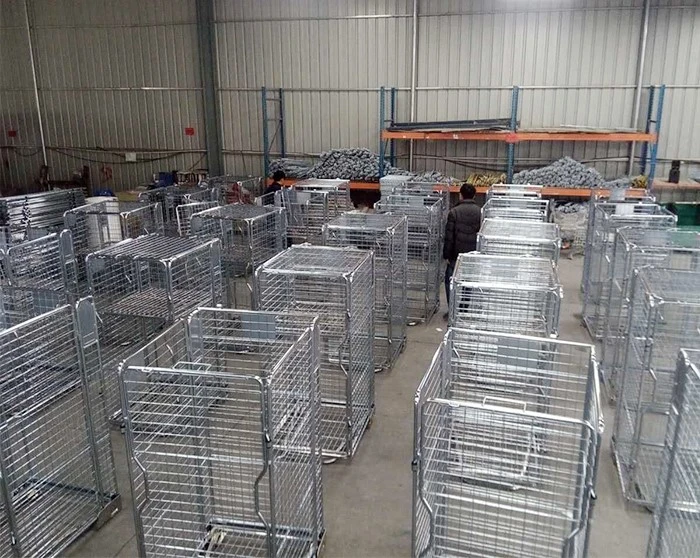
Solid-steel shelving has flat, continuous shelves — typically formed sheet steel, sometimes with welded or bolted construction — supported by steel posts. It offers the highest weight capacity per shelf, a continuous surface that keeps small parts and liquids from falling through, and a very durable, dent-resistant structure. It is the workhorse of warehouses, garages, archives, and industrial storage. Common types include boltless rivet shelving (tool-free assembly) and heavy-duty bolted shelving. Solid shelves also act as a fire barrier of sorts and can support stored items that would fall through wire.
Wire Shelving Explained
Wire shelving uses an open grid of steel wire (typically 0.63-1.2 mm wire, chrome or epoxy coated) welded to frame channels. Its defining property is the open surface: air and light pass through, water drains, and dirt cannot accumulate — which is why it dominates food service, retail display, pharmacy, and cleanroom storage. Wire decks also integrate with wire mesh rack decking for pallet rack. The trade-off: per-shelf capacity is typically lower than solid steel (though heavy-duty wire shelving reaches 300-600 kg/shelf), and very small items need a liner or tray.
Head-to-Head Comparison

| Factor | Solid Steel Shelving | Wire Shelving |
|---|---|---|
| Weight capacity | Higher (heavy-duty up to 1,000+ kg/shelf) | Good (typically 100-600 kg/shelf) |
| Air circulation | None (solid surface) | Excellent (open grid) |
| Cleanliness | Dust accumulates on surface | Dust falls through; washable |
| Small item retention | Holds small parts | Needs trays/liners |
| Visibility | Opaque | Transparent, see-through |
| Corrosion resistance | Painted/galvanized options | Chrome or epoxy coated, good |
| Cost | Lower per shelf typically | Higher per shelf typically |
Weight Capacity & Structure
Capacity depends on shelf construction and post rating. Solid-steel shelves carry more because the full surface distributes the load across the frame; wire shelves concentrate load on the wire grid and channels. Typical ranges: light-duty solid shelves 150-300 kg, medium-duty 300-500 kg, heavy-duty bolted 500-1,000+ kg; wire shelving commonly 100-600 kg depending on gauge and configuration. For mixed or heavy goods, match the shelf rating to the heaviest stored item per shelf — never mix wire and solid shelves in one bay without verifying frame capacity. If you need very high loads, a heavy-duty industrial shelving system is the safer choice.
Air Circulation & Cleanliness
Airflow is where wire shelving is unbeatable. Perishable goods (produce, baked goods) last longer with air circulating on all sides; linens, textiles, and electronics avoid trapped humidity; and food-service hygiene standards are easier to meet because debris falls through and surfaces are visibly cleanable. Solid steel traps dust and moisture on the surface, which matters in food prep, cleanrooms, and storage of moisture-sensitive goods. Conversely, in a dusty industrial environment, solid shelves are easier to wipe clean than wire grids and keep dust off the stored product. Choose based on what the stored item needs.
Environment & Corrosion Resistance
Both materials are steel and need corrosion protection in wet or humid environments. Wire shelving is usually chrome-plated (attractive, moderately corrosion resistant) or epoxy-coated (better corrosion resistance, standard in food service); solid-steel shelving is typically painted or galvanized, with galvanized (zinc-coated) best for damp or chemical environments. In commercial kitchens, cold storage, or wash-down areas, epoxy-coated wire is the standard, and food-service installations commonly follow NSF sanitation requirements. In unconditioned warehouses or chemical storage, galvanized solid steel or epoxy wire both perform; avoid raw painted surfaces where moisture is constant. Check coating quality — cheap paint chips quickly, exposing bare steel.
Cost & Long-Term Value
Unit cost: solid-steel shelves are generally cheaper per shelf than wire for the same footprint, and heavy-duty steel systems cost less per kg of capacity. But total cost includes the environment: in food service, wire’s cleanability and hygiene compliance can justify its higher upfront price; in a dusty warehouse, solid steel’s wipe-clean surface and higher capacity win the value calculation. Also consider longevity: quality coatings on either type last 10-15+ years indoors. Buy from a manufacturer with replaceable parts (posts, shelves, clips) so a damaged shelf is replaced, not a whole unit discarded. ZEOU supplies both types with interchangeable components.
How to Choose
- Warehouse bulk storage → heavy-duty solid steel.
- Food prep / restaurant / cold storage → epoxy-coated wire.
- Retail display → wire (visibility) or solid (dust protection).
- Pharmacy / cleanroom → wire, chrome or epoxy.
- Garage / archive / heavy parts → solid steel, heavy duty.
FAQ
Is wire shelving as strong as solid steel shelving?
Generally no — solid steel carries more per shelf (up to 1,000+ kg in heavy-duty types vs typically 100-600 kg for wire). Heavy-duty wire exists but costs more for the same capacity.
Why is wire shelving used in food service?
Wire shelves circulate air (keeping food fresh), allow water to drain, and are visibly cleanable — meeting food-service hygiene standards. Epoxy-coated wire resists corrosion in wash-down environments.
Can small items be stored on wire shelving?
Yes, with a liner, tray, or solid shelf inserts. The open grid allows small items to fall through, so use pans, bins, or liner mats for small parts.
Which is cheaper, steel or wire shelving?
Solid-steel shelves are typically cheaper per shelf and per kg of capacity. Wire shelving costs more per shelf but can be the better value where hygiene or airflow requirements exist.
Does wire shelving rust?
Only if the coating fails. Chrome is moderately corrosion resistant; epoxy coating is better. In wet or humid environments, use epoxy-coated or galvanized options and check for coating damage.
Steel & Wire Shelving from One Manufacturer
Sources: Industry practice.
