

Wire mesh decking is one of the most important — and most overlooked — components of a pallet rack system. It transforms bare beams into a safe, functional storage surface.
For wire shelving solutions for other applications, see ZEOU wire shelving.
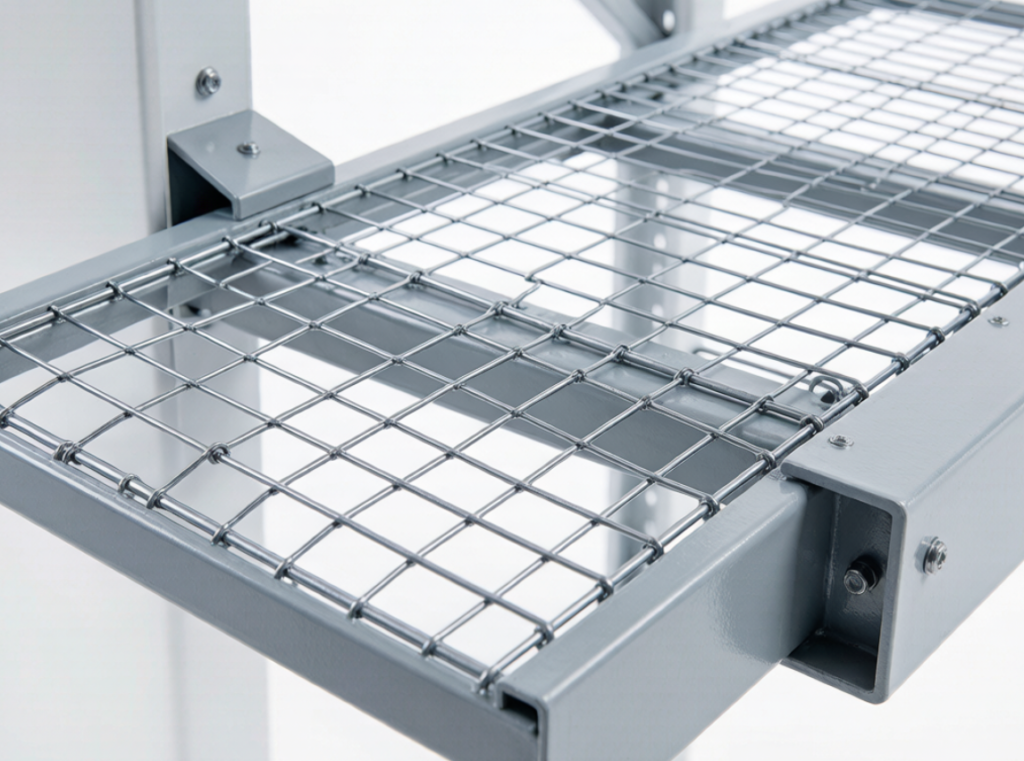
What Is Wire Mesh Decking?
Wire mesh decking (also called wire decking or wire rack decking) is a welded steel grid panel designed to sit on top of pallet rack step beams. It replaces plywood, pallet boards, or no decking at all — providing a safe, uniform support surface for pallets and items stored on rack beams.
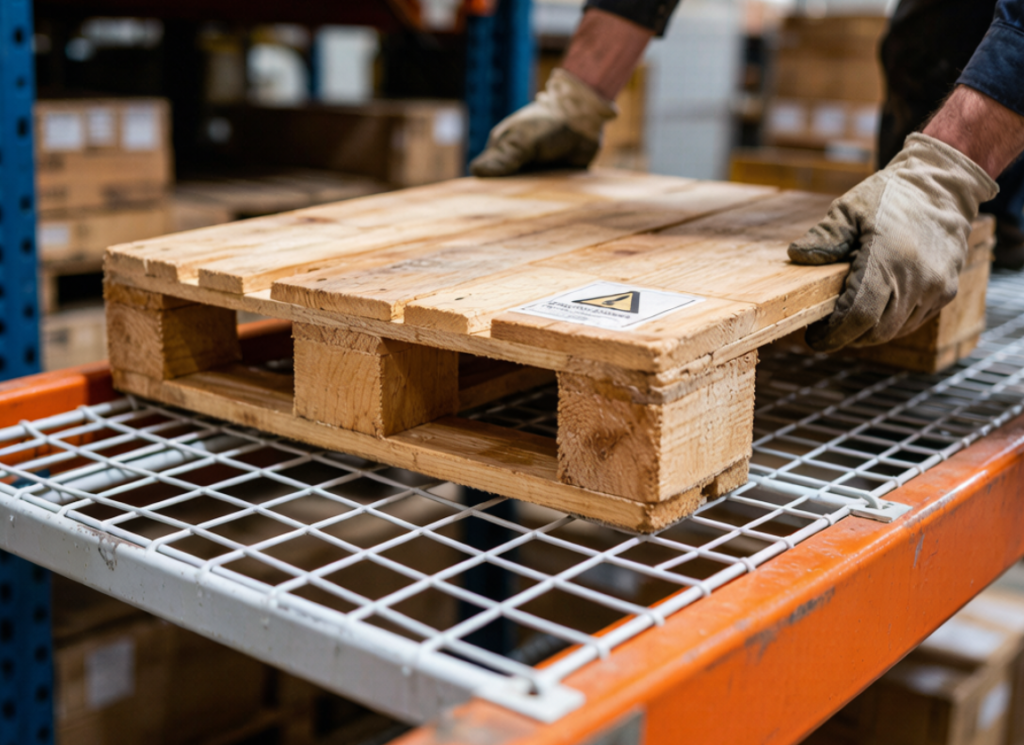
Why wire deck matters: Without wire decking, pallets can shift, snag on beams, or have boards that span unevenly between beams. Wire decking distributes the pallet load evenly across both beams, prevents product fall-through, and allows fire sprinkler water to reach lower levels.
Channel Edge vs Square Edge vs Flared
| Edge Type | Description | Best For |
|---|---|---|
| Channel edge | Formed channel sits flush with beam top | Modern step beams, standard pallet rack |
| Square edge | Flat edge extends beyond beam width | Wider bearing surface, retrofitting older racks |
| Flared / waterfall edge | Edge angles downward at 45° | Forklift entry guides, prevents snagging |
Standard Sizes & Wire Gauges
Standard widths: 42″, 44″, 46″, 48″ (matches standard pallet rack beam lengths). Also available in 60″, 72″, 96″, 120″ for longer spans. Standard depths: 36″, 42″, 48″ (matches rack depth). Wire gauge: 2-ga (heavy-duty), 4-ga (standard), 6-ga (light-duty), 8-ga (economy). The wire gauge determines both load capacity and price.
Load Capacities
Typical capacities (48″ span): 2-ga wire deck: 2,500-3,000 lbs. 4-ga wire deck: 1,800-2,200 lbs. 6-ga wire deck: 1,200-1,500 lbs. Capacity depends on span (distance between beams), wire gauge, channel size, and whether the deck has additional support bars.
Safety Benefits
Wire mesh decking provides several critical safety advantages mandated by OSHA 1910.22 for storage area safety:
- Debris fall prevention: Closed wire grid prevents items from falling through beams
- Fire sprinkler penetration: Open mesh allows water from sprinklers to reach lower rack levels — critical for NFPA 13 compliance
- Load distribution: Evenly distributes pallet weight across both beams
- Visibility: Light passes through, improving visibility for inventory checks
- Air circulation: Prevents moisture buildup under pallets
Galvanized vs Painted
Galvanized (hot-dip galvanized): Superior corrosion resistance. Recommended for food processing, cold storage, coolers, humid climates, outdoor areas, and pharmaceutical environments. Higher initial cost but longer service life.
Powder-coated (painted): Good protection for dry warehouse environments. Available in colors (gray, blue, red, black) for color-coded zone identification. Lower cost than galvanized.
Selection Guide
New warehouse with standard pallet rack: 4-ga channel edge, galvanized. Best value for most applications. Cold storage / freezer: 2-ga channel edge, galvanized. Heavier gauge compensates for brittle steel in cold temperatures. FIFO / flow rack applications: Flared edge or waterfall edge to guide pallets. Replacement decks for older racks: Square edge for compatibility with older beam profiles.
FAQ
What is wire mesh decking?
Steel grid panel placed on pallet rack beams for safe, even load support.
Channel vs square edge?
Channel = flush with beams. Square = extends beyond. Channel is more common in modern racks.
Standard sizes?
Widths: 42-120″. Depths: 36-48″. Gauges: 2-ga to 8-ga.
Load capacity?
1,000-3,000+ lbs. Depends on gauge, span, and channel size.
Galvanized vs painted?
Galvanized = corrosion resistant (cooler, outdoor). Painted = cost-effective for dry warehouses.
Conclusion
Wire mesh decking is not an accessory — it is a core safety component of a properly configured pallet rack system. It prevents product damage, improves fire safety, extends rack life, and protects workers. Choosing the right edge type, gauge, and finish ensures your wire deck performs for the full service life of your rack system.
