

Warehouse shelving is one of the most versatile storage solutions available. Unlike pallet racking (designed for palletized loads), shelving handles individual items, cases, cartons, and small parts directly — without requiring pallets.
For wire shelving options including NSF-certified commercial shelving, see ZEOU commercial shelving.

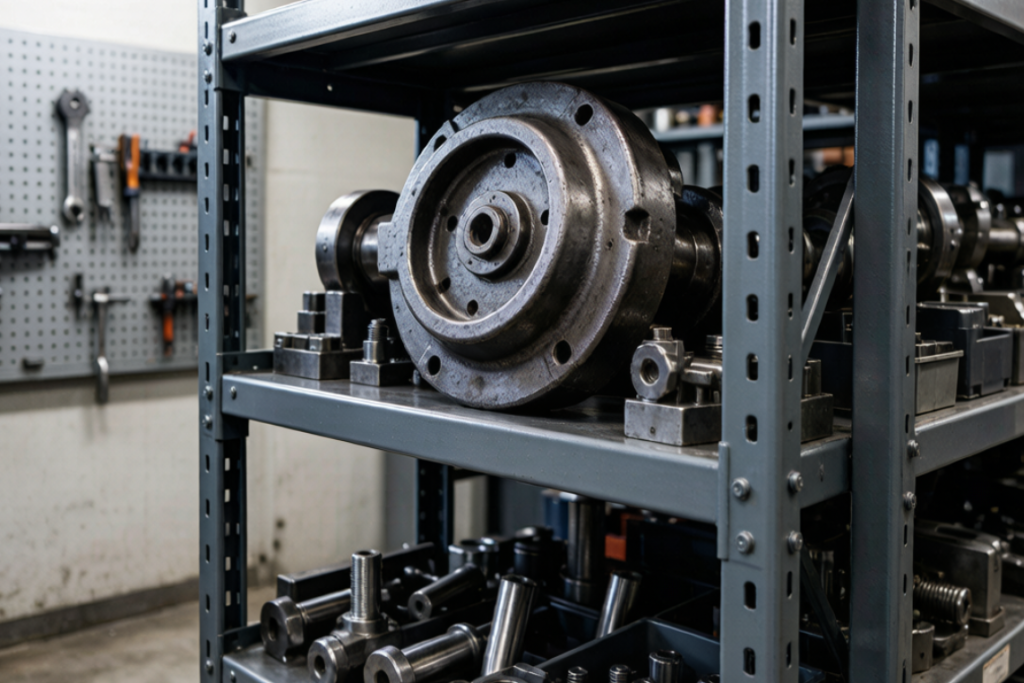
Warehouse Shelving Overview
Warehouse shelving falls into four main categories based on load capacity and construction: boltless shelving (rivet shelving), heavy duty bolted shelving, medium duty shelving, and longspan shelving. Each type uses different connection systems, material gauges, and frame designs to achieve its rated capacity.
MHI (Material Handling Institute) provides classification guidelines for industrial shelving systems based on load range and intended application.
Boltless Shelving (Rivet Shelving)
Most popular shelving type: Boltless shelving uses a patented clip-in connection — shelf beams have integral rivets that lock into slots on the upright posts. No bolts, nuts, or tools required for assembly or adjustment. A typical unit assembles in under 10 minutes.
Load capacity: 800–2,000 lbs per shelf level. Shelf depths: 12–36 inches. Beam lengths: 24–72 inches. Typical applications: Retail backrooms, warehouse parts storage, archive rooms, distribution centers.
Advantages: Fast assembly, easy shelf height adjustment (1.5″ increments), tool-free reconfiguration, lower cost than bolted. Disadvantages: Lower rigidity than bolted, maximum load limited compared to heavy duty bolted systems.
Heavy Duty Bolted Shelving
Heavy duty bolted shelving uses bolted connections between beams and uprights, providing maximum structural rigidity. It is designed for industrial environments storing heavy items — dies, molds, bulk hardware, tooling, and heavy machine parts.
Load capacity: 2,000–4,000+ lbs per shelf level. Shelf depths: 18–48 inches. Beam lengths: 36–96 inches. Typical applications: Manufacturing plants, tool rooms, heavy parts warehouses, industrial supply centers.
The OSHA walking-working surfaces standard (1910.22) applies to heavy duty shelving installations, requiring clear load ratings and safe stacking practices.
Medium Duty Shelving
Medium duty shelving occupies the middle ground between light utility shelving and heavy duty industrial shelving. It typically uses lighter-gauge steel than heavy duty but still provides substantial load capacity for most commercial and light industrial applications.
Load capacity: 500–1,500 lbs per shelf level. Shelf depths: 12–24 inches. Typical applications: Retail stockrooms, office supply storage, archive storage, pharmaceutical, cleanrooms.
Longspan Shelving
Bridging the gap: Longspan shelving fills the space between standard shelving and pallet racking. With beam spans of 4-12 feet and capacities of 1,000-4,000 lbs per level, it handles bulky items that are too large for standard shelves but not heavy enough to require pallet rack infrastructure.
Construction: Longspan uses heavy-gauge roll-formed beams similar to pallet rack beams, with bolted or clip-in connections to upright frames. It offers beam lengths significantly longer than standard shelving (up to 12 feet).
Applications: Retail backroom bulk storage, furniture storage, auto parts, building materials, appliance storage, and oversized item storage.
Shelving Type Comparison Table
| Type | Capacity/Level | Beam Length | Assembly | Best Application |
|---|---|---|---|---|
| Boltless (Rivet) | 800–2,000 lbs | 24–72″ | Tool-free | Retail, warehouse, archive |
| Medium Duty | 500–1,500 lbs | 24–60″ | Bolted or clip | Office, retail, cleanroom |
| Heavy Duty Bolted | 2,000–4,000+ lbs | 36–96″ | Bolted | Industrial, tool rooms, heavy parts |
| Longspan | 1,000–4,000 lbs | 48–144″ | Bolted or clip | Bulky items, furniture, building materials |
Selection Guide by Application
Retail backroom / stockroom: Boltless shelving (rivet) — fast assembly, good aesthetics, moderate load capacity. Industrial parts storage: Heavy duty bolted — maximum capacity and rigidity. Archive storage: Medium duty boltless — adequate capacity, lower cost. Furniture / bulky items: Longspan shelving — wide spans accommodate oversized products.
Materials & Finishes
Most warehouse shelving is fabricated from cold-rolled steel (CRS) or hot-rolled steel (HRS). Finishes include: Powder coat (painted): Most common. Available in gray, black, beige, or custom colors. Galvanized: For moisture-prone environments (food service, coolers, outdoor). Stainless steel: For cleanrooms, pharmaceutical, medical, and corrosive environments.
Shelving Safety & Load Management
Regardless of shelving type, three principles apply: Never exceed published load ratings. The load rating applies to uniformly distributed loads — concentrated loads require derating. Anchor all units over 60 inches tall. Wall anchors or floor anchors prevent tipping. Distribute loads evenly. Heavier items on lower shelves. Inspect regularly for bent beams, damaged uprights, or loose connections.
FAQ
What is boltless shelving?
Clip-in connection shelving that assembles without tools. Also called rivet shelving or tear-drop shelving.
What is heavy duty shelving capacity?
1,500–4,000+ lbs per level. Bolted connections maximize rigidity.
What is longspan shelving?
Wide-span shelving (4-12 feet) bridging standard shelving and pallet rack. For bulky/oversized items.
How to choose between boltless and bolted?
Boltless for quick assembly and medium loads. Bolted for heavy loads and permanent installations.
What is medium duty shelving used for?
Retail stockrooms, archives, office supply, light warehouse — 500-1,500 lbs/level.
Conclusion
Choosing the right warehouse shelving depends on your load requirements, item sizes, and operational needs. Boltless shelving offers speed and flexibility for medium-duty applications. Heavy duty bolted shelving provides maximum capacity for industrial environments. Longspan shelving fills the critical gap for bulky, oversized items. By matching the shelving type to your specific application, you optimize both storage efficiency and cost.
