

In healthcare environments, storage systems are more than basic infrastructure. They directly affect workflow efficiency, infection control, inventory accuracy, and patient safety. From central supply rooms and pharmacies to sterile processing departments and laboratories, choosing the right shelving system is a critical operational decision.
Among the most common options, wire shelving and plastic shelving are widely used across healthcare facilities. While both serve important roles, they are designed for different conditions and applications. This guide provides a clear, application-driven comparison to help healthcare professionals select the most appropriate shelving solution.
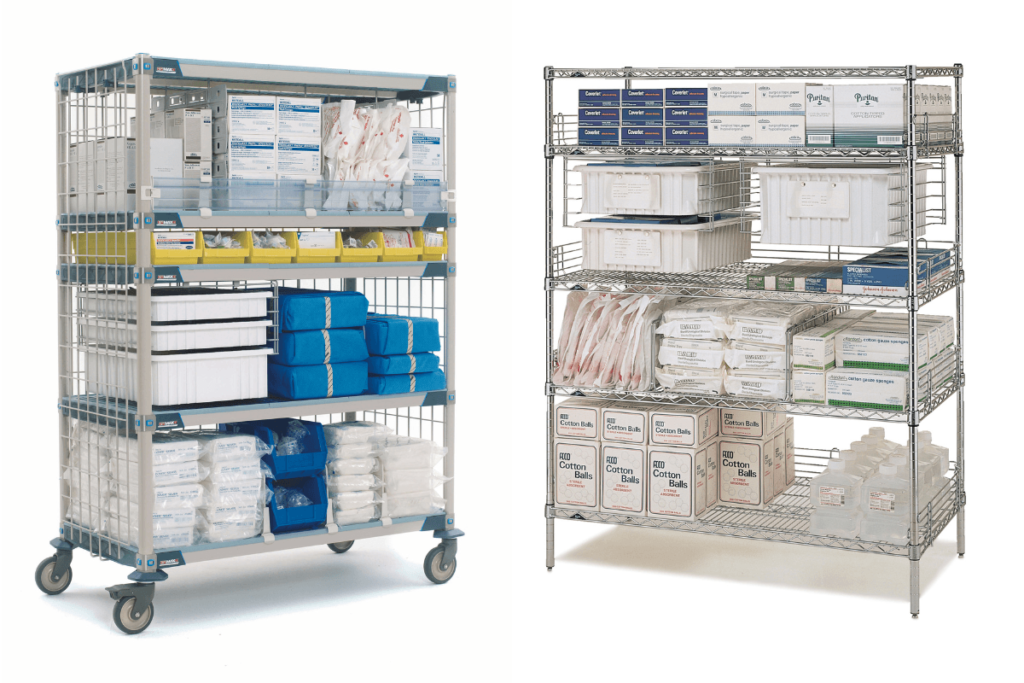
Storage Requirements in Healthcare Facilities
Healthcare storage environments must meet stricter standards than most commercial or industrial spaces. Shelving systems are expected to support:
Consistent hygiene and infection control
Frequent cleaning with hospital-grade disinfectants
Safe storage of sterile and non-sterile supplies
Efficient access and inventory rotation
Compliance with healthcare regulations and best practices
Understanding these requirements is essential before evaluating shelving materials.
Overview of Wire Shelving in Healthcare
Wire shelving is typically constructed from steel wire with chrome plating or epoxy coatings. Its open-wire structure allows airflow, visibility, and easy adjustment of shelf heights.
In healthcare facilities, wire shelving is commonly used in general storage areas where flexibility, ventilation, and cost efficiency are priorities rather than strict sterility.
Overview of Plastic Shelving in Healthcare
Plastic shelving systems are made from high-performance polymer materials designed for medical and laboratory use. These systems often feature smooth surfaces and removable shelf mats, supporting frequent cleaning and infection control.
Plastic shelving is commonly used in environments where hygiene standards are critical and where exposure to moisture or cleaning chemicals is frequent.
Key Differences Between Wire and Plastic Shelving
While both shelving types are used in healthcare settings, their performance differs significantly depending on application requirements. The table below highlights the key factors that healthcare decision-makers typically consider when comparing wire shelving and plastic shelving.
Wire Shelving vs. Plastic Shelving in Healthcare
| Key Factor | Wire Shelving | Plastic Shelving |
|---|---|---|
| Hygiene & Infection Control | Suitable for non-sterile areas | Ideal for sterile and clean environments |
| Surface Design | Open wire structure with weld points | Smooth, solid or vented surfaces |
| Corrosion Resistance | Good with coating, limited in wet areas | Excellent, will not rust or corrode |
| Airflow & Ventilation | Excellent airflow | Moderate, depends on shelf design |
| Protection of Medical Packaging | May damage sensitive sterile packs | Protects sterile and delicate packaging |
| Typical Healthcare Use | General storage, supply rooms | Sterile processing, pharmacy, labs |
This comparison shows that neither shelving system is universally superior. Instead, each serves a distinct role within healthcare storage environments.
When to Use Wire Shelving
Wire shelving is best suited for healthcare areas where airflow, visibility, and adaptability are important and where strict sterility is not required. Common applications include:
Central supply and bulk storage rooms
Non-sterile back-of-house storage
Logistics and distribution areas
Support spaces where inventory changes frequently
Wire shelving offers strong load capacity, easy reconfiguration, and cost efficiency, making it a practical solution for large-scale, general-purpose storage.
When to Use Plastic Shelving
Plastic shelving is designed for environments that demand higher hygiene standards and surface protection. It is particularly suitable for:
Sterile processing departments
Pharmacies and medication storage areas
Laboratories and clean rooms
Wet or high-humidity environments
Its smooth, non-corrosive surfaces reduce the risk of contamination and packaging damage, supporting infection control protocols.
Choosing the Right Shelving Strategy
Rather than selecting one shelving type for an entire facility, many healthcare organizations adopt a mixed approach. Wire shelving is used in non-critical storage zones, while plastic shelving is installed in areas where cleanliness and surface integrity are essential.
When making a decision, healthcare facility managers should consider:
The level of sterility required in each area
Exposure to moisture and cleaning chemicals
The type and sensitivity of stored materials
Long-term maintenance and lifecycle costs
Future expansion and reconfiguration needs
Aligning shelving systems with specific application requirements leads to safer, more efficient storage operations.
Conclusion
Wire shelving and plastic shelving both play important roles in healthcare storage systems. Wire shelving provides flexibility, ventilation, and cost efficiency for general storage, while plastic shelving delivers superior hygiene, corrosion resistance, and surface protection for critical clinical environments.
The most effective healthcare storage solutions are application-driven. By selecting the right shelving material for each functional area, healthcare facilities can improve efficiency, maintain compliance, and support high standards of patient care.
