

Wire shelving is widely used in commercial retail, industrial storage, and residential organization systems. Although wire shelves appear simple in structure, their real quality and service life depend not only on the raw materials used, but more importantly on the precision of the manufacturing process behind them.
For buyers, distributors, and project customers, understanding how wire shelving is manufactured helps distinguish product quality, evaluate supplier capabilities, and make more informed purchasing decisions. This article explains the complete wire shelving manufacturing process, outlining the seven key steps from initial design to finished product.
Step 1: Designing and Planning
The manufacturing process begins long before production starts on the shop floor.

During the design and planning stage, engineers and designers work together to define the overall structure of the wire shelving system. This includes determining shelf dimensions, number of tiers, load-bearing capacity, and safety requirements based on the intended application. Wire shelving designed for retail display differs significantly from shelving used in industrial or commercial storage environments.
At the same time, the production team plans material requirements, surface treatment options, and estimated production timelines to ensure a smooth manufacturing flow. A well-developed design phase balances durability, functionality, and visual proportions, providing a solid foundation for the entire production process.
Step 2: Wire Selection and Cutting
Material selection plays a critical role in determining the strength, stability, and corrosion resistance of wire shelving.
Manufacturers typically select different wire materials based on the operating environment, such as carbon steel, stainless steel, or steel wire designed for specific surface coatings. Applications exposed to moisture, food contact, or medical environments often require higher corrosion resistance.
Before forming begins, both wire and posts are precisely cut using specialized cutting equipment. Accurate cutting ensures consistent dimensions, smooth edges, and proper alignment during welding. Upright posts are usually prepared in advance, as they serve as the primary load-bearing components of the shelving system.
Step 3: Forming the Wire and Post
After cutting, the wire enters the forming stage.
Using bending machines or automated forming equipment, steel wire is shaped into the required grid pattern. Precise control of bending angles and stress points is essential to prevent weak spots or deformation, which could compromise structural integrity over time.
Upright posts are also processed through bending or rolling operations to enhance strength and load capacity. For adjustable wire shelving systems, posts may be punched or pre-processed at specific positions to allow flexible shelf height adjustment.
Step 4: Welding and Joining
Welding is one of the most critical steps in wire shelving production.
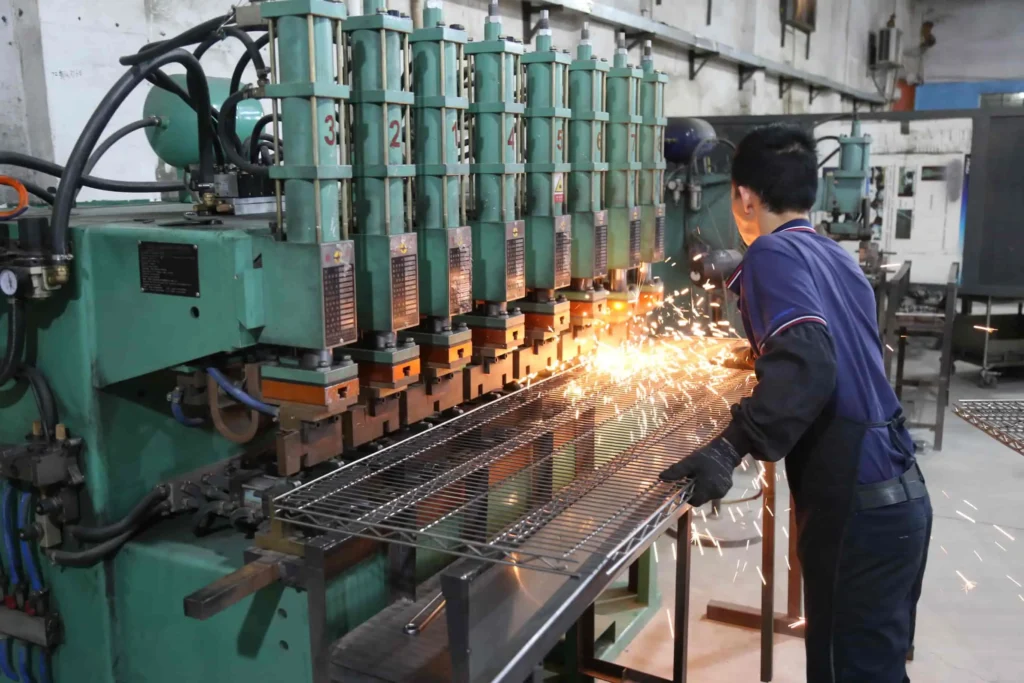
Spot welding or arc welding is commonly used to securely join the formed wire components into a stable frame. The consistency and strength of weld points directly affect the shelf’s durability and long-term performance.
After welding, joints are typically polished or ground to improve surface smoothness and remove sharp edges. This not only enhances the appearance of the product but also improves safety during installation and daily use. In some designs, mechanical connections or reinforced structures may be incorporated to further strengthen the shelving system.
Step 5: Surface Treatment and Finishing
Surface treatment determines both the appearance and corrosion resistance of wire shelving.
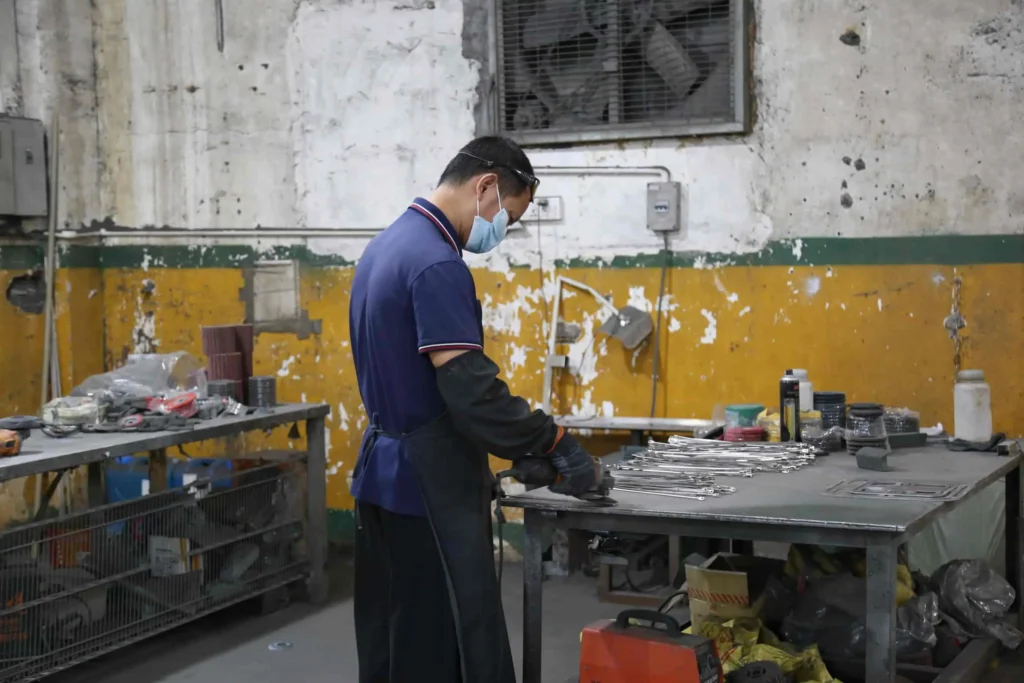
Before coating or plating, products undergo pre-treatment processes such as pickling and phosphating. These steps remove oil, residue, and surface impurities while creating a protective base layer that helps prevent oxidation.
Depending on the application and product positioning, manufacturers may apply different finishing methods, including:
- Powder coating, cured at controlled temperatures to ensure long-lasting color and adhesion
- Electroplating, which enhances corrosion resistance and provides a refined metallic appearance
- Common finishes such as epoxy powder coating, chrome plating, or zinc plating
Proper surface treatment significantly extends product lifespan while maintaining consistent visual quality.
Step 6: Inspection and Quality Control
Reliable manufacturers implement strict quality control throughout the entire production process.
At this stage, finished wire shelving is inspected for dimensional accuracy, structural integrity, weld quality, and surface finish consistency. Load-bearing and stability tests are also conducted to ensure compliance with design specifications and applicable standards.
A comprehensive quality control system ensures that every batch of wire shelving delivered to customers meets consistent safety and performance requirements, reflecting the manufacturer’s technical capability and production discipline.
Step 7: Packing and Loading
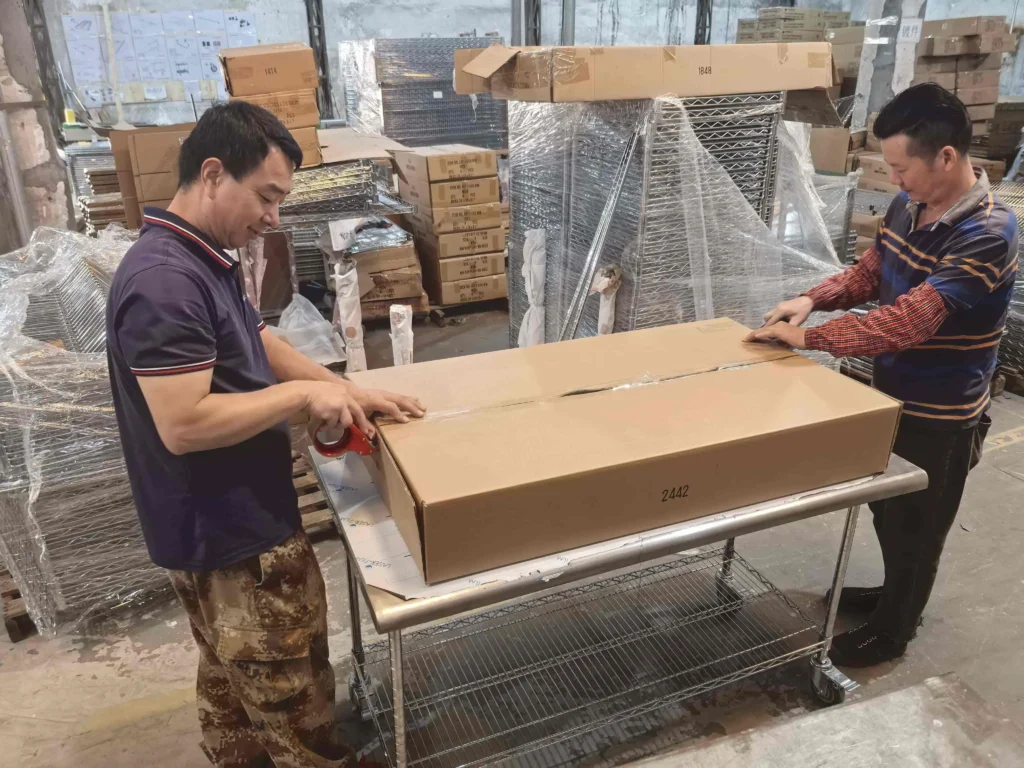
Once quality inspection is completed, the products move to the packing and loading stage.
To prevent deformation, impact damage, or surface scratches during transportation, wire shelving is packed using protective materials and optimized packaging methods. Clear labeling and complete documentation help improve logistics efficiency and ensure accurate delivery to customers.
Careful packing is essential to preserve product quality from the factory to the final destination.
Conclusion
The manufacturing of wire shelving is not a simple metal fabrication task, but a systematic process that combines engineering design, material selection, precision forming, welding expertise, surface treatment, and quality control.
From the initial design stage to surface finishing and final inspection, every detail directly affects the shelf’s load capacity, durability, and safety. For buyers and project customers, understanding these manufacturing steps—especially welding quality and surface treatment processes—provides a more reliable basis for evaluating product quality than price alone.
