China Shelving with Bins Manufacturers Suppliers Factory
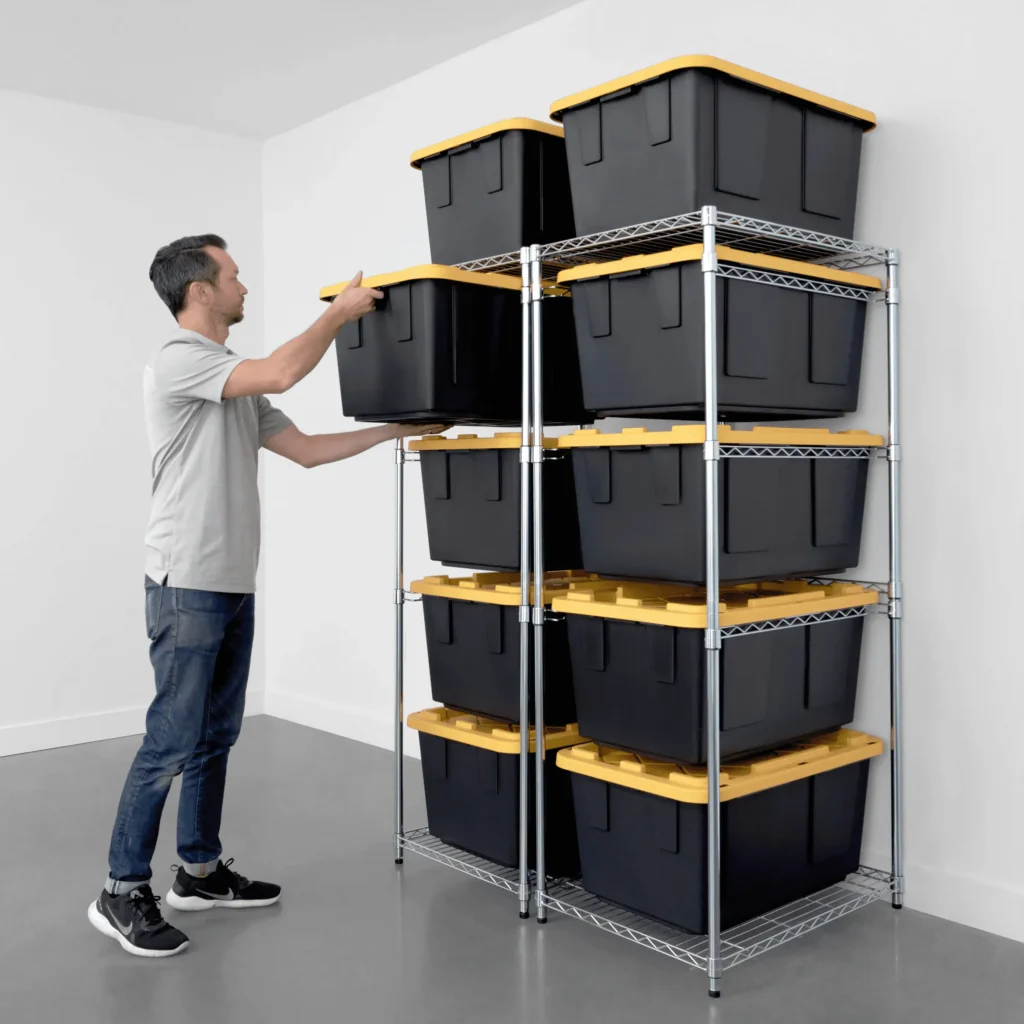
ZEOU Shelving with Bins helps organize small parts and supplies in a clear, efficient way. By combining durable shelving with practical bins, it improves visibility, reduces clutter, and supports smoother daily work in storage and work areas.
- Home
- 页面: Shelving with Bins
In many workplaces, the biggest storage challenge is not large items, but small ones. Screws, components, tools, accessories, consumables, documents, and daily supplies all take up space in small amounts—but in large variety. When these items are stored loosely or mixed together, time is wasted, mistakes increase, and work becomes frustrating.
Shelving with bins is designed to solve this exact problem. By combining open shelving with bins or totes, it creates a clear, structured way to store, pick, and replenish small items. This guide looks at shelving with bins from a practical, real-world perspective and explains how to design systems that stay organized over the long term.
What Is Shelving with Bins?
Shelving with bins refers to storage systems that combine shelving frames with removable bins, totes, or containers. The shelving provides structural support, while the bins organize items by type, size, or usage.
Unlike open shelves where items are stacked directly on the shelf surface, bin-based shelving assigns each item a defined “home.” This makes storage clearer, easier to manage, and more scalable as inventory grows.
It is widely used wherever small items are handled frequently.
Where Shelving with Bins Is Commonly Used
Shelving with bins is used across many industries and environments.
In warehouses and fulfillment centers, it supports pick-and-pack operations for small SKUs. In manufacturing and assembly areas, it organizes components, fasteners, and parts close to the point of use. Tool rooms and maintenance departments use bin shelving to keep tools and spare parts visible and easy to return.
Supply rooms, electronics rooms, laboratories, and even offices rely on shelving with bins to manage consumables, accessories, and shared items efficiently.
Wherever small items move often, bin shelving becomes a core organizational tool.
Why Open Shelving Alone Often Fails
Open shelving looks simple, but without bins, it quickly becomes messy.
Items get mixed together. Small parts slide or fall. Labels are hard to maintain. Over time, shelves turn into “temporary storage” areas that never stay organized.
Bins solve this by:
- Separating items clearly
- Preventing mixing and loss
- Supporting consistent labeling
- Making inventory levels easier to see
The structure provided by bins is what keeps the system working day after day.
Types of Bins Used in Shelving Systems
Not all bins are the same, and choosing the right type matters.
Plastic bins are the most common. They are lightweight, durable, and easy to clean. Many designs allow stacking or hanging, depending on the shelving system.
Totes are larger bins used for higher-volume items or grouped components. They are often used in warehouses and production areas.
Some systems use divided bins, allowing multiple item types to be stored within one container. Others use transparent bins to improve visibility.
The best bin type depends on item size, picking frequency, and handling method.
Wire Shelving vs. Solid Shelving with Bins
Shelving with bins can be built on both wire and solid shelving structures.
Wire shelving offers good airflow and visibility. It works well in clean environments and makes it easy to spot dust, spills, or misplaced bins.
Solid shelving provides a flat, continuous surface and may feel more stable for heavy bins. It is often used in industrial settings or where bins are frequently moved.
In practice, both options work well when properly matched to the application.
Load Capacity and Daily Stability
While bins often hold small items, total weight can add up quickly.
Shelving systems must support the combined weight of bins and contents without sagging or wobbling. This is especially important in environments where bins are frequently removed and replaced.
Strong uprights, reinforced shelves, and reliable connections help maintain stability. Clear load ratings ensure shelving is used safely across different areas.
Stability matters more than appearance when the system is in constant use.
Organization, Labeling, and Visual Control
One of the biggest advantages of shelving with bins is visual control.
When each bin is labeled and assigned to a specific item, it becomes easy to see what is in stock and what needs replenishment. Missing bins are noticed immediately. Misplaced items stand out.
This supports better inventory discipline without complex systems. Even simple color-coding or front-labeling can dramatically improve accuracy.
Good shelving design supports these visual cues naturally.
Workflow Efficiency and Picking Speed
Shelving with bins is often chosen to improve speed.
In picking and assembly environments, having items sorted into bins reduces search time and handling. Workers can move faster with fewer errors.
Bins also make restocking easier. Entire bins can be removed, refilled, and returned without disrupting the rest of the shelf.
Over time, this improves both productivity and consistency.
Flexibility and Modular Design
Storage needs change.
New items are added, quantities increase, or workflows shift. Shelving with bins works well because it is modular.
Bins can be resized, rearranged, or replaced. Shelf heights can be adjusted. Entire sections can be expanded without replacing the whole system.
This flexibility makes bin shelving suitable for growing operations or environments where needs are constantly evolving.
Cleanliness and Maintenance
Bins help keep shelves cleaner.
Instead of loose items collecting dust, bins contain materials and reduce surface clutter. Cleaning shelves becomes easier when bins can be temporarily removed.
In environments with cleanliness requirements—such as electronics rooms or healthcare storage—bins also help reduce contamination and improve organization.
Durable materials and smooth surfaces support long-term maintenance.
Safety Considerations
Even small items can create safety issues if stored poorly.
Bins prevent items from falling off shelves. Clear organization reduces clutter that can block aisles or workspaces. Stable shelving prevents tipping when bins are removed unevenly.
Heavier bins should be placed on lower shelves to maintain balance. Proper layout planning reduces strain from reaching or bending.
Good design improves both safety and comfort.
Customization for Different Applications
Shelving with bins is rarely one-size-fits-all.
Different environments require different bin sizes, shelf depths, and layouts. Professional suppliers often offer:
- Multiple bin sizes and styles
- Adjustable shelf spacing
- Fixed or mobile shelving frames
- Accessories such as dividers, label holders, and stops
Customization allows the system to match real usage rather than forcing workarounds.
How to Choose a Reliable Shelving with Bins Manufacturer
A reliable manufacturer understands that the bins and the shelving must work together.
Consistent dimensions, stable construction, and durable materials matter more than appearance. Clear specifications and repeatable quality are essential for long-term use.
Manufacturers like ZEOU focus on practical design and reliable production, helping customers build bin shelving systems that stay organized instead of slowly breaking down over time.
Final Thoughts
Shelving with bins is one of the most effective ways to manage small items. It brings order, visibility, and flexibility to environments where loose storage quickly becomes a problem.
By choosing the right combination of shelving and bins—and designing the system around real workflows—organizations can reduce clutter, improve accuracy, and make daily work smoother.
In many operations, shelving with bins is not just storage. It is the foundation of efficient, organized work.
Wire Retail Shelving Specifications
| Wire Retail Shelving Specifications | |
|---|---|
| Shelf Size Options | 600×350mm / 900×450mm / 1200×450mm / 1200×600mm (custom sizes available) |
| Shelf Material | Carbon Steel / Stainless Steel 304 or 201 |
| Wire Diameter | 4.0mm / 4.5mm / 5.0mm (customizable) |
| Post Diameter | 25mm / 32mm (chrome-plated or powder-coated) |
| Load Capacity | 100–350 kg per shelf (depending on size and reinforcement) |
| Surface Finishes | Chrome / Zinc / Powder Coating / Stainless Steel / Zinc + Powder |
| Height Options | 1200mm / 1500mm / 1800mm / 2000mm (custom heights available) |
| Shelf Adjustability | 1-inch (25.4mm) incremental adjustment |
| Accessories | Dividers, Hooks, Casters, Label Holders, Wire Baskets, Shelf Liners |
| Mobility Option | Fixed Feet or Lockable Heavy-Duty Casters |
| Packaging | Knock-down (KD) export packing with optional custom branding |
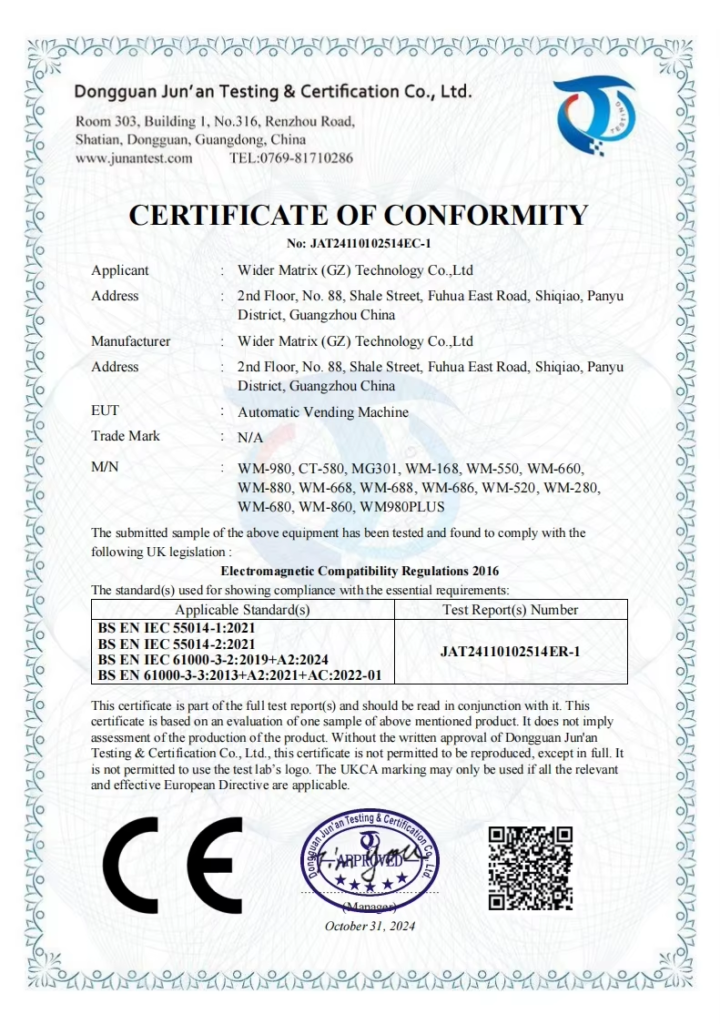
Certificates
About ZEOU
Dongguan Zeou Hardware Products Co., Ltd. specializes in manufacturing metal wire shelving, display racks, logistics carts, and commercial wire storage systems. With technology originating from Taiwan, our headquarters is located in Shenzhen Nanshan, and we established our Dongguan branch in 2013.
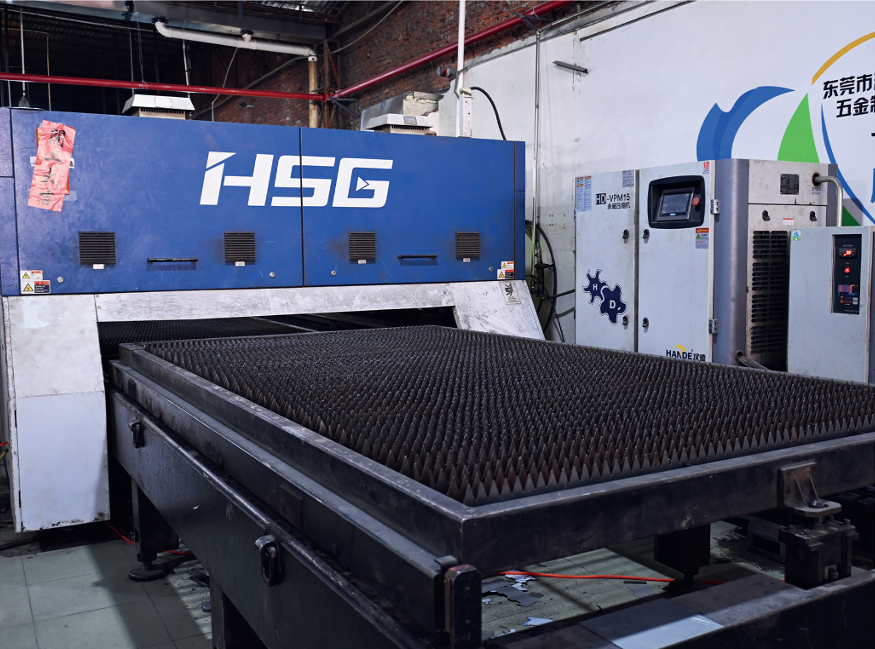
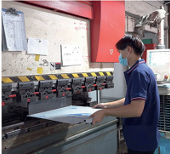
Our factory covers over 15,000 m² and employs 200 staff, including 40 skilled technicians. We export 95% of our products, with a monthly output of up to 200×40HQ containers. About 70% of our equipment is automated, including wire-forming lines, tube and sheet processing lines, robotic welding machines, CO₂ welders, automatic rolling machines, laser cutters, CNC bending machines, and more.
We offer multiple surface treatments such as chrome plating, zinc plating, powder coating, zinc + powder, zinc + clear coating, and stainless-steel electrolytic finishing.
Services
OEM/ODM Custom Manufacturing
Customized sizes, load capacities, finishes, accessories, and packaging based on your retail or distribution needs.
trong Engineering & Technical Support
Professional design assistance for shelving layout, structural optimization, and product matching for different retail environments.
Stable Production & Large-Volume Supply
Automated equipment and high-capacity manufacturing enable fast lead times and reliable long-term supply.
Strict Quality Control System
Material inspection, welding checks, load testing, surface-treatment inspection, and final packing quality checks.
Flexible Logistics & Global Delivery
Support for mixed-container loads, custom labeling, export packing, and worldwide shipping coordination.
FAQS
1. Can ZEOU provide OEM/ODM services for wire retail shelving?
Yes. We offer full OEM/ODM support, including custom sizes, load capacities, finishes, accessories, packaging, and branding options for distributors and retail chains.
2. What is the typical production and delivery time?
Standard models usually take 25–35 days, while customized projects vary depending on complexity and order size. We support urgent production schedules when needed.
3. What surface finishes are available?
We offer chrome plating, zinc/galvanized finish, powder coating, zinc + powder, and stainless-steel finishes to meet different retail, warehouse, and cold-chain environments.
4. What is your monthly production capacity?
Our factory produces up to 200×40HQ containers per month, supported by automated wire-forming, welding, tube-cutting, and coating lines.
5. Do you support small MOQ orders for new markets?
Yes. For new distributors or new market testing, we offer flexible MOQ options. For long-term partners, we support large-volume and long-term supply programs.
6. Can you help design shelving layouts for retail stores or warehouses?
Absolutely. Our engineering team can provide store layout suggestions, load evaluations, and customized shelving solutions based on your retail environment and display needs.
rapid response
Interested in the product? Fill out the form now to get more information.